
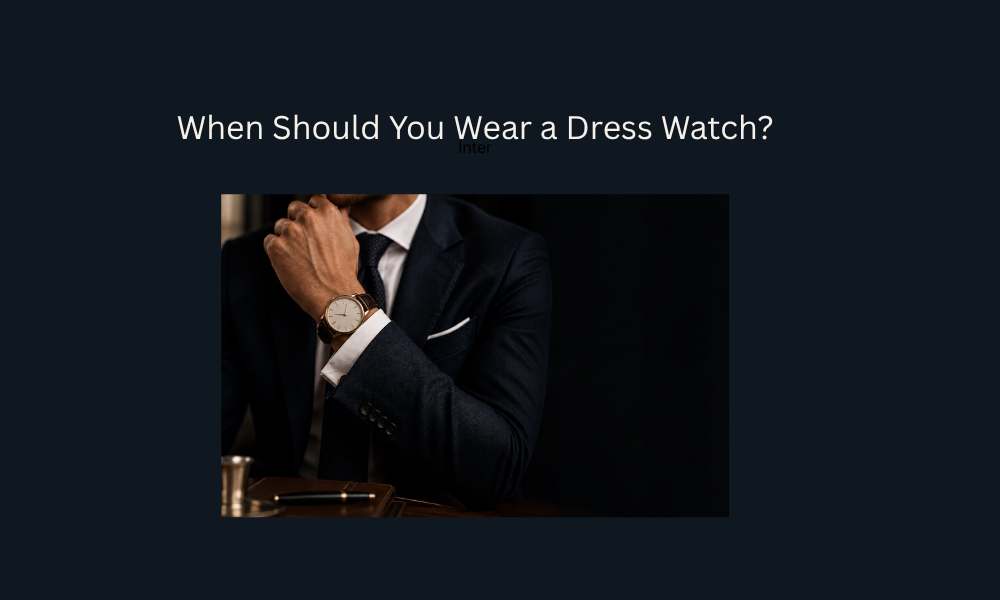
When Should You Wear a Dress Watch?
Executing flawless Dress Watch Etiquette requires a structured styling framework that prioritizes situational awareness, wardrobe coordination, and event formality over arbitrary aesthetic impulses. Applying sports-watch habits to formal events breaks fundamental styling rules and communicates a lack of situational awareness. This guide provides the framework for systematically evaluating event dress codes, coordinating fabrics and accessories, and utilizing a quantitative scoring checklist to finalize your formal presentation.
How to define the core rules of your dress watch etiquette
Defining the core rules of your Dress Watch Etiquette establishes the foundational philosophy that dictates when a formal timepiece is appropriate to wear.
- Rule: The watch must match the formality of the room.
- Reason: Wearing a heavy sports watch to a gala signals a severe lack of situational awareness.
- Example: Defining your baseline as fitted formal environments immediately restricts your dress watch usage to events requiring a suit or tuxedo.
Why does event formality anchor your dress watch etiquette
Understanding why event formality anchors your Dress Watch Etiquette requires establishing how strict dress codes create the absolute baseline for formal watch wearing. Formal timepiece rules demand strict adherence to occasion guidelines. Establishing your event styling baseline starts by matching the physical dimensions and presentation of the watch to the specific tier of formality. A White Tie occasion requires an invisible horological presence, while Black Tie accepts a minimalist, ultra-thin gold piece on black leather. Moving to Business Professional environments permits subtle steel models with slight date complications, demonstrating that the severity of the dress code directly dictates the visual footprint of the watch.
What specific events demand your dress watch etiquette
Determining what specific events demand your Dress Watch Etiquette involves mapping specific life events to the exact type of timepiece required to respect the occasion.
Weddings & Galas (Black Tie): Highly formal evening events. → Result: Mandatory use of an ultra-thin, time-only dress watch on a black leather strap (or no watch at all, historically).
Funerals & Somber Ceremonies: Respectful, muted environments. → Result: Requires an understated, minimalist dress watch that does not draw attention or flash under lighting.
Boardroom Presentations: High-stakes corporate environments. → Result: Perfect for a date-complication dress watch that projects quiet professionalism.
Are business casual settings viable for your dress watch etiquette
Evaluating if business casual settings are viable for your Dress Watch Etiquette demands determining if a strict formal watch can be effectively dressed down for modern office environments or weekend dinners. Expanding your alternative wearing occasions depends entirely on smart timepiece versatility selection.
The Viable Setting
Button-down shirts, blazers, and chinos.
→ Action: Swap the shiny black alligator strap for a matte brown or suede strap to reduce the formality of the dress watch.
The Unviable Setting
T-shirts, shorts, and sneakers.
→ Action: Remove the dress watch entirely; the delicate aesthetic severely clashes with ultra-casual clothing.
While understanding the strict boundaries of formalwear is crucial, many collectors naturally look for ways to extend the utility of their timepieces. Successfully adapting formal watches for everyday use requires a careful balance of strap texture, dial simplicity, and overall outfit coordination to ensure the watch doesn’t look completely out of place in a relaxed setting.
Do specific suit fabrics dictate your dress watch etiquette
Analyzing how specific suit fabrics dictate your Dress Watch Etiquette injects commercial realism by explaining how the texture and weight of your clothing alter when to wear a specific watch.
If you are wearing a heavy, textured tweed or flannel suit in winter
→ Do pair it with a slightly thicker dress watch on a textured calfskin strap
→ Result the visual weight of the watch matches the heavy fabric, maintaining proportional harmony.
Is evaluating strap coordination critical for your dress watch etiquette
Assessing if evaluating strap coordination is critical for your Dress Watch Etiquette prevents fashion clashes by ensuring the watch integrates seamlessly with the rest of your formal accessories.
- Rule: Leathers and metals must always match.
- Reason: Mismatched accessories break the cohesive elegance required at formal events.
- Example: Opting to leave your silver dress watch at home if you are wearing gold cufflinks and a gold belt buckle.
How to prevent dress-code mistakes in your dress watch etiquette
Preventing dress-code mistakes in your Dress Watch Etiquette involves strictly matching the watch’s formality level to the specific invitation to avoid embarrassing social faux pas.
The Risk: Wearing a massive, $44\text{mm}$ steel dive watch to a black-tie wedding.
→ The Reality: The watch will not fit under a French cuff, snagging your jacket and ruining the elegant silhouette of your tuxedo.
The Risk: Checking a highly complicated chronograph during a formal dinner.
→ The Reality: In traditional high-society etiquette, tracking exact time at a formal event implies you are bored and have somewhere better to be.
How to conclude your dress watch etiquette with this final execution checklist
Concluding your Dress Watch Etiquette with this final execution checklist provides a strong, objective closure that transforms the occasion guidelines into an actionable styling system.
- Rule: A scored checklist ensures adherence to formal tradition.
- Reason: Quantifying your outfit and event prevents embarrassing style clashes.
- Example: Only strapping on the dress watch if the event, suit, and accessories score perfectly.
Execution Checklist
Score $5/5$: Immediate Wear. The dress watch perfectly complements the occasion and your attire.
Score $3-4/5$: Pause. Identify the mismatched accessory (e.g., brown strap with black shoes) and correct it before leaving the house.
Score $<3/5$: Leave It Behind. Do not wear the dress watch; the event is too casual, or your outfit severely clashes with the timepiece.
Support Appendix: Advanced Dress Watch Etiquette Troubleshooting & FAQ
Resolving common operational hurdles in your Dress Watch Etiquette seamlessly integrates troubleshooting to resolve advanced styling confusion and formal friction.
Q: Is it true you shouldn’t wear any watch to a white-tie event?
A: Historically, yes. Traditional etiquette dictates that wearing a watch to the most formal of events (white-tie) implies you are concerned about the time, which is considered rude to the host. If you must, a hidden pocket watch is the traditional loophole.
Q: Can I wear a dress watch every day to a casual office?
A: Yes, if you “dress it down.” A highly polished gold watch on a shiny black alligator strap will look out of place with jeans. However, swapping that strap for a matte suede or textured leather instantly makes the watch appropriate for daily casual wear.
Q: Can a metal bracelet ever be worn with a tuxedo?
A: Traditionalists will say no, as metal links are inherently sporty. However, ultra-fine, highly polished mesh bracelets (like the Milanese loop) can occasionally pass at modern black-tie events if the watch itself is exceptionally thin.
References
Conclusion
By systematically evaluating the formality of the event, the texture of your wardrobe, and the strict rules of accessory coordination, you elevate your styling from guesswork to flawless Dress Watch Etiquette. Prioritizing situational awareness ensures that your formal timepiece is worn exactly when it should be, serving as a subtle mark of sophistication that respects the occasion.